
Houston ADAS – Certified ADAS Calibration Experts In Porter TX You Can Trust
After a minor crash near Kingwood, a driver assumed their vehicle was fine—until their automatic emergency braking failed at a busy Houston intersection. Most drivers don’t realize anything is wrong until the system fails in a real driving situation, usually when reaction time matters most.
Houston ADAS, owned by David Evans and located in Porter, TX, is a Certified Calibration Center dedicated to restoring vehicle safety systems to exact OEM standards. Drivers looking for ADAS calibration services in Porter TX after a collision can better understand how the process works through comprehensive ADAS system calibration and diagnostic procedures performed by trained specialists. Using OE software, precise calibration targets, and a controlled indoor calibration lab, every system is tested, verified, and road validated before being returned to the driver. Serving Porter, Kingwood, Humble, New Caney, and the Greater Houston area, Houston ADAS helps ensure your vehicle is truly safe after a collision, not just repaired on the surface.
What Happens If You Skip ADAS Calibration After A Collision In Porter TX?
What if your car’s safety system reacts too late or doesn’t react at all when you need it most?
ADAS calibration is the process of realigning cameras and radar sensors to manufacturer specifications after a collision or repair. Without this step, the system may operate using incorrect positioning data.
After a collision, even a minor one, ADAS sensors like radar units and forward-facing cameras can shift by just a few millimeters or fractions of a degree. That may not sound like much, but for systems like Automatic Emergency Braking (AEB), Forward Collision Warning (FCW), and Lane Keep Assist (LKA), that small misalignment can completely change how the system interprets distance, speed, and lane position.
Even a 0.5-degree misalignment in a forward-facing camera can shift detection range by several feet at highway speeds, which directly impacts how quickly the system reacts.
After a low-speed rear-end collision in Humble, a driver had their bumper replaced but declined ADAS calibration because no warning lights appeared. A few days later, while merging onto I-69 during morning traffic, the vehicle’s forward collision system failed to recognize slowing traffic ahead.
The driver expected the automatic emergency braking system to assist, but it reacted too late. The driver had to manually brake hard to avoid impact. When the vehicle was later inspected, technicians found the front radar sensor was slightly misaligned from the collision, causing incorrect distance calculations. Once recalibrated, the system returned to normal operation.
For example:
- A misaligned radar sensor on a 2020 Ford F-150 may calculate distance incorrectly, causing delayed braking
- A forward camera on a 2019 Honda Accord could misread lane markings, leading to drift or overcorrection
- A 2021 Nissan Rogue may trigger phantom braking due to incorrect object detection
According to OEM guidelines and safety organizations like the National Highway Traffic Safety Administration and the Insurance Institute for Highway Safety, recalibration is required after many types of collisions, even when no visible damage is present. Skipping this step puts you at risk of system failure when it matters most.
Signs Your ADAS System Needs Calibration After A Collision In Porter TX
Your dashboard might look normal, but your safety systems could already be compromised.
One of the most dangerous aspects of ADAS miscalibration is that many systems do not trigger warning lights. Drivers in Porter and Humble often assume everything is working because no alerts are present, but that’s not how these systems operate.
Watch for these subtle signs:
- Lane assist pulls slightly left or right
- Steering feels off after repair
- Braking alerts come too early or too late
- Adaptive cruise control behaves inconsistently
In many Toyota Camry (2018+) and Chevrolet Silverado (2019+) models, camera misalignment won’t trigger a warning and instead continues operating with inaccurate data, a behavior widely documented in vehicle safety research and manufacturer service procedures. That’s why a post-collision diagnostic scan and calibration check is critical.
What many drivers don’t realize is that ADAS systems are designed to operate silently. A system can be misaligned and still appear normal until a critical moment when it’s needed most.
Why Even Minor Fender Benders In Kingwood And Humble Require ADAS Calibration
“My car looks fine, so the sensors must be fine too…”
This is one of the most common and dangerous misconceptions. ADAS components are often mounted behind bumpers, windshields, and mirrors, areas that absorb impact even in low-speed collisions.
Impacts as low as 5–10 mph can:
- Shift radar brackets
- Slightly tilt camera mounting angles
- Alter sensor alignment relative to the vehicle’s centerline
In parking lot accidents around Kingwood or stop-and-go traffic in Humble, these small impacts are enough to throw off calibration. The vehicle may still drive normally, but its safety systems are no longer reliable.
The Hidden Safety Risks Of Driving Without ADAS Calibration In Houston Traffic
Driving I-69 during rush hour, your vehicle fails to detect a sudden stop ahead.
Houston’s driving conditions make ADAS systems even more critical. With heavy congestion, sudden braking, and frequent lane changes on highways like Beltway 8 and I-69, drivers rely on these systems for split-second decisions.
In areas like Porter and New Caney, where highways quickly shift from open driving to dense traffic, ADAS systems must constantly adjust to speed and distance changes. Even slight miscalculations can become dangerous in these transitions.
When miscalibrated, systems may:
- Fail to detect stopped vehicles in time
- Trigger false braking events (“phantom braking”)
- Drift within lanes or misread lane markings
The vehicle appears to be working normally, but it’s making decisions based on incorrect data, something the driver has no way of seeing. In wet conditions, glare, or flooding, which are common in the Houston area, these risks are amplified.
How Certified ADAS Calibration Near Porter TX Restores Vehicle Safety Systems
Calibration accuracy depends heavily on the environment, tools, and setup. Even small inconsistencies in lighting, spacing, or floor level can affect the results.
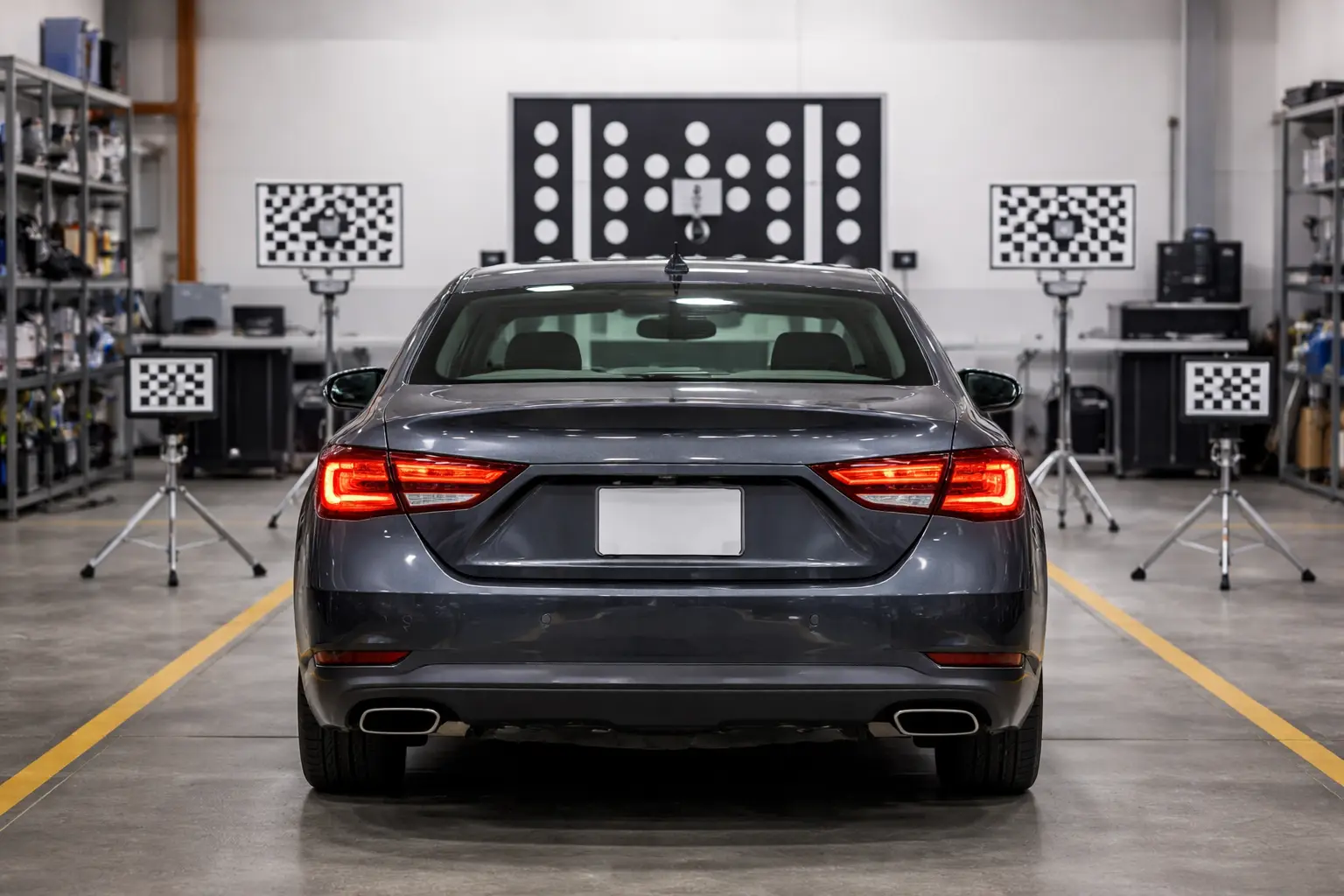
At Houston ADAS, calibration is performed inside a controlled indoor lab where lighting, floor level, and spacing are tightly controlled by experienced ADAS calibration technicians with advanced vehicle safety expertise and hands-on experience in advanced driver assistance system calibration and vehicle safety restoration.
The process includes:
- Static calibration using manufacturer-specific targets and alignment boards
- Precise positioning using laser measurement tools and OEM scan systems
- Dynamic calibration through controlled road testing
Some vehicles require both static and dynamic calibration to fully restore system accuracy, depending on manufacturer specifications.
OEM vs aftermarket matters:
- OE software communicates directly with vehicle systems
- Aftermarket tools may lack full calibration capabilities
One common issue is assuming a scan tool alone confirms proper calibration. In reality, many systems require physical alignment procedures that cannot be verified through software alone. Without proper targets and environment setup, calibration may appear complete but still be inaccurate.
Each calibration follows manufacturer-specific procedures used by brands like Ford, Honda, Toyota, and Nissan to ensure system accuracy.
Every vehicle, whether it’s a Honda Accord, Ford F-150, or Nissan Rogue, requires specific procedures. Houston ADAS ensures all calibrations meet OEM specifications and are verified before the vehicle is returned.
Case Study: Porter TX Driver Skipped Calibration And Faced Emergency Braking Failure
A Porter driver declined calibration after a minor repair, days later, their AEB system failed at a stoplight.
The driver wanted to save money and skipped calibration after a front-end repair. A few days later, while driving through New Caney traffic, their vehicle failed to brake in time when traffic suddenly stopped.
The result:
- Near collision
- Emergency recalibration required
- Additional repair costs
Calibration isn’t optional in these situations. It’s part of restoring the vehicle’s safety systems to how they were designed to function.
Most drivers skip calibration to reduce immediate costs, but the cost of calibration is often far less than the cost of a secondary accident or repeated repairs. In many cases, insurance already covers this step when it’s tied to collision work.
Expert Tip: When To Schedule ADAS Calibration After A Collision Near Porter TX
“If you’ve had any impact at all, don’t guess. Verify.”
As an ASE-certified technician with over 20 years of experience, here’s the rule: If anything affects sensor position, calibration is required.
Always schedule ADAS calibration after:
- Any collision (minor or major)
- Windshield replacement
- Wheel alignment or suspension work
- Ride height changes or sensor replacement
Even if your vehicle wasn’t directly impacted, calibration may still be required if nearby components were removed or adjusted during repair. For example, removing a bumper, grille, or windshield can affect sensor positioning even without visible damage.
Use electronic scheduling to book quickly, and take advantage of pick-up and delivery service so you’re not driving an unsafe vehicle. If you’re asking whether you need ADAS calibration after a minor accident, the safest answer is to have it checked immediately.
FAQs About ADAS Calibration After Collision In Porter TX And Nearby Areas
These are the exact questions drivers in Porter, Kingwood, and Humble are asking.
Q: Can I drive without calibration after a minor accident?
A: You can, but your safety systems may not function correctly, even if there are no warning lights.
Q: Will my vehicle tell me if calibration is needed?
A: Not always. Many systems operate incorrectly without triggering alerts.
Q: How long does ADAS calibration take?
A: Typically 1–4 hours depending on the vehicle, system complexity, and whether static and dynamic calibration are required.
Q: Is calibration required by manufacturers?
A: Yes. Most OEMs require recalibration after impacts or repairs affecting sensors.
Q: Does insurance cover ADAS calibration?
A: In many cases, yes, especially after collision repairs.
Q: Where can I get ADAS calibration near me in Porter TX?
A: Houston ADAS is a Certified Calibration Center serving the Greater Houston area.
Schedule ADAS Calibration Near Porter TX Today For Safer Driving
Don’t wait until your safety system fails when you need it most.
Houston ADAS is your trusted Auto Repair Shop in Porter TX specializing in ADAS calibration, diagnostics, and post-collision safety verification. Located just minutes from Kingwood, Humble, and New Caney, they provide precise, OEM-level calibration that protects you and your passengers.
With electronic scheduling, pick-up and delivery service, and a fully controlled calibration lab, getting your vehicle safely recalibrated has never been easier.
- 22321 E Martin Dr Suite B, Porter, TX 77365
- Call 281-354-8777
- Schedule your appointment
- Follow us on Facebook.
If your vehicle has been in any collision, don’t guess. Get it calibrated, verified, and safe.
With over three decades of management and operational experience, David Evans has built Houston ADAS from the ground up, focusing on precisely calibrating ADAS systems. His leadership is guided by a passion for automotive safety and a deep understanding of the ADAS landscape. David is not just a visionary; he’s a hands-on leader with I-Car ProLevel 1 and 2 ADAS certifications, ensuring he stays connected to the core operations of his business.