
Introduction: Why accurate ADAS calibration in Porter TX matters on Houston roads
Picture this: you’re driving down Beltway 8 near I-69 after getting your vehicle back from a collision repair shop. Everything seems fine until your lane keep assist begins to drift, gently nudging the vehicle toward the shoulder. There’s no warning light and no obvious failure, just a subtle but dangerous inaccuracy.
This is exactly what many drivers across the Greater Houston area experience when ADAS calibration is not performed correctly. Modern driver assistance systems rely on extremely precise alignment, and even a small deviation can change how the vehicle interprets its surroundings.
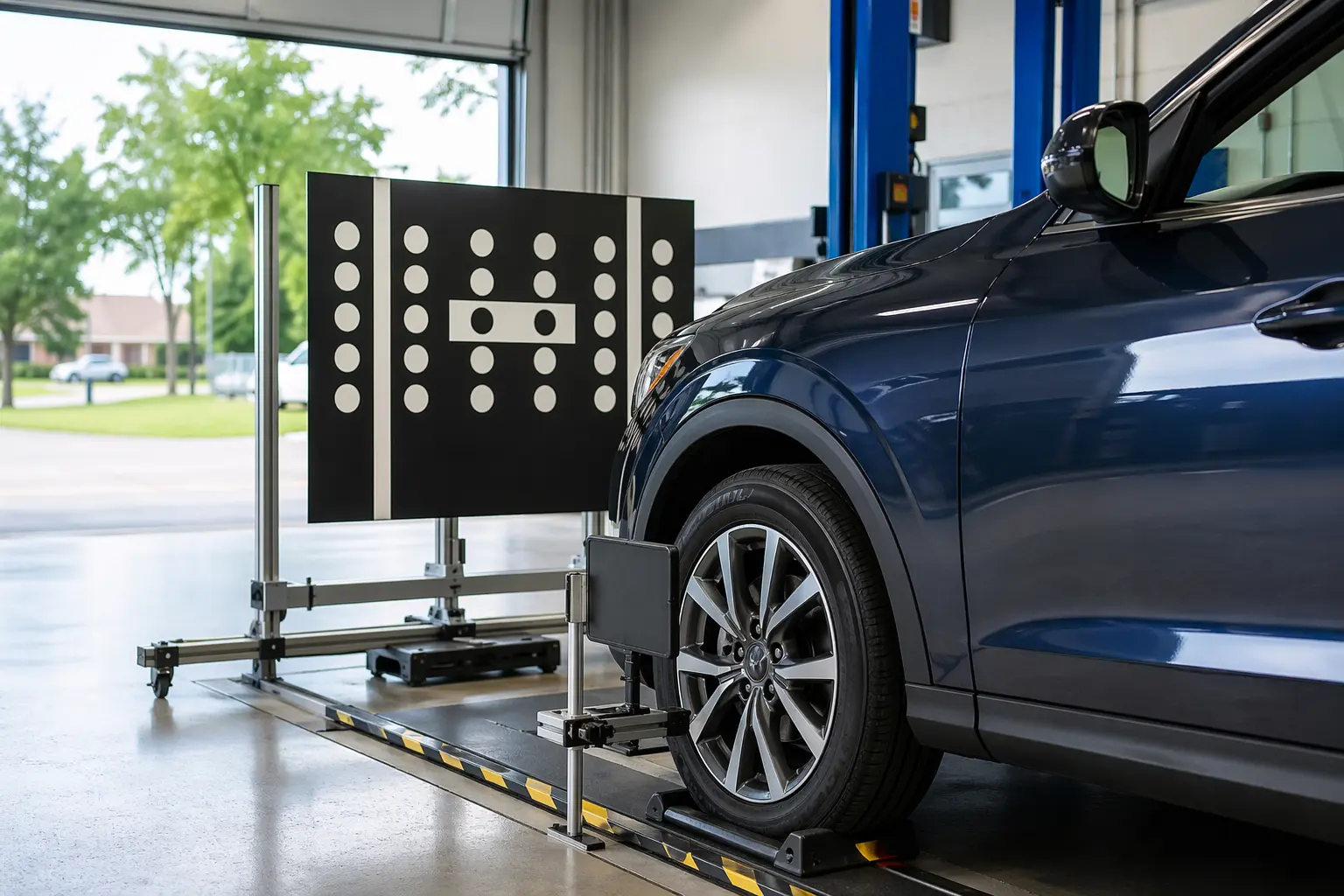
At Houston ADAS, a certified ADAS calibration center and auto repair shop in Porter TX, every calibration is completed inside a controlled indoor calibration facility using OEM procedures and factory-level software. The goal is simple: eliminate guesswork and restore the system to the exact specifications intended by the manufacturer.
If you’ve been searching for ADAS calibration near me or need calibration after collision repair, understanding what actually happens inside a controlled lab can make all the difference in your safety.
A driver from Kingwood recently brought in a vehicle after having a windshield replaced at a general glass shop. The calibration had been performed quickly outside, and everything seemed fine at first. Within a few days, the driver noticed the lane assist system drifting slightly and the forward collision warning reacting inconsistently at highway speeds.
When the vehicle was evaluated inside a controlled environment, it became clear the camera had been calibrated under poor lighting and incorrect positioning. After recalibration using OEM procedures, the system performed as expected. Situations like this are more common than most drivers realize.
Step-by-step ADAS calibration process in a controlled lab in Porter TX
ADAS calibration is not a quick scan or a simple reset. It is a structured process that requires both technical precision and environmental control. Inside a professional calibration facility, technicians begin by performing a full OEM diagnostic scan. This allows them to identify which systems require calibration, whether any fault codes are present, and whether the vehicle is ready for the procedure.
Once the system requirements are identified, technicians evaluate the specific sensors involved. This typically includes forward-facing cameras responsible for lane keeping and traffic sign recognition, radar sensors that manage adaptive cruise control and collision detection, and the steering angle sensor that tracks the vehicle’s direction.
The next phase involves preparing the vehicle inside the controlled lab. This is where precision becomes critical. Targets are positioned at exact distances based on manufacturer specifications, often within a narrow range measured in millimeters. The targets must also align perfectly with the vehicle’s centerline and thrust angle. Any deviation at this stage can affect the entire calibration outcome.
After setup is complete, technicians from an experienced ADAS calibration team use OEM tools to execute the calibration. The system recalibrates each sensor relative to the vehicle’s geometry, ensuring that what the sensors “see” matches real-world positioning. Once calibration is complete, verification begins. This includes post-scan checks and, when required, dynamic road testing to confirm that the system performs correctly under real driving conditions.
The key takeaway is that calibration accuracy depends on both the process and the environment. Having the right tools is only part of the equation.
What ADAS calibration is and why it’s required after repairs
ADAS calibration is the process of aligning a vehicle’s safety systems so they accurately detect lanes, vehicles, and obstacles. These systems rely on cameras, radar, and sensors that must be positioned with extreme precision to function correctly.
Even minor repairs can affect this alignment. A slight shift in the vehicle’s structure, suspension geometry, or sensor mounting position can cause the system to interpret data incorrectly. This is why calibration is required after many common repairs, including windshield replacement and collision repair, as well as suspension adjustments.
Without proper calibration, systems like lane assist and automatic braking may respond too late, too early, or not at all. The vehicle may appear to operate normally, but its safety systems are no longer reliable.
What is a controlled ADAS calibration lab and why it matters in Porter TX
A controlled ADAS calibration lab is specifically designed to remove environmental variables that can interfere with calibration accuracy. Unlike outdoor or mobile setups, these labs maintain consistent lighting, flat surfaces, and controlled spacing to ensure that every measurement is accurate.
Lighting is one of the most overlooked factors. Sunlight glare or reflections can distort how cameras interpret calibration targets. Floor slope is another critical factor, as even a slight incline can alter sensor alignment. By eliminating these variables, a controlled lab creates a repeatable environment where calibration can be performed with confidence.
This level of control is what separates high-quality calibration from inconsistent results.
Why a controlled indoor calibration lab in Porter TX is critical for accurate ADAS calibration
There is a common misconception that calibration is simply a matter of connecting a scan tool and following prompts. In reality, ADAS systems operate within extremely tight tolerances. Measurements are often within millimeters, and angles are measured in fractions of a degree.
A misalignment of just half a degree can shift a sensor’s detection range by several feet at highway speeds. That difference can affect how the vehicle reacts to surrounding traffic, potentially delaying braking or misjudging lane position.
Environmental factors play a major role in this. Uneven floors can tilt the vehicle, sunlight can create glare, and reflections from nearby surfaces can interfere with camera readings. In an uncontrolled environment, these variables introduce inconsistencies that can lead to inaccurate calibration.
A controlled indoor calibration facility removes these risks, ensuring that the calibration is performed under ideal conditions.
How pre-calibration conditions affect ADAS accuracy in Porter TX vehicles
Before calibration can begin, the vehicle itself must be properly prepared. ADAS systems rely on the vehicle’s physical condition as a reference point, which means even small inconsistencies can affect the outcome.
Tire pressure must be set correctly, as uneven pressure can alter the vehicle’s height and stance. Ride height must match manufacturer specifications, and the vehicle should have a balanced fuel load to ensure proper weight distribution. Any excess cargo should be removed, as additional weight can shift the vehicle’s alignment.
Wheel alignment is one of the most critical preconditions. If the wheels are not aligned correctly, the vehicle’s reference angle changes, which directly impacts how sensors interpret direction. Skipping this step can result in a calibration that appears successful but is actually inaccurate in real-world driving conditions.
What many drivers don’t realize is that these systems are calibrated to the vehicle’s exact geometry at a specific moment. Even small changes in suspension height or weight distribution can affect how sensors interpret their surroundings.
How cameras, radar, and steering sensors work together in ADAS systems
ADAS systems are designed to function as a network rather than as independent components. Cameras, radar sensors, and steering angle sensors all work together to create a complete understanding of the vehicle’s surroundings.
For example, the forward-facing camera identifies lane markings and objects, while radar sensors measure distance and speed. The steering angle sensor tracks how the vehicle is moving relative to its intended path. These systems share data continuously to make decisions such as when to apply brakes or adjust steering.
If one sensor is misaligned, it can disrupt the entire system. A properly calibrated camera paired with a misaligned radar sensor can result in incorrect distance calculations, delayed responses, or unnecessary braking. This is why multi-system calibration is essential after repairs that affect more than one component.
How ADAS calibration targets, OEM tools, and sensor alignment work
Inside a controlled lab, calibration relies on a combination of physical targets and advanced diagnostic tools. Calibration targets are placed at precise distances and angles based on manufacturer specifications. These targets provide a reference point for the vehicle’s sensors, allowing them to align accurately.
Technicians use laser measurement systems to ensure that these targets are positioned exactly relative to the vehicle’s centerline. Even a small deviation can affect how the system interprets the target, which is why precision is critical at every step.
OEM scan tools are then used to communicate with the vehicle’s systems and initiate the calibration process. These tools follow manufacturer procedures, ensuring that each step is completed correctly. Using OEM equipment rather than generic tools helps maintain accuracy and consistency.
Static vs dynamic ADAS calibration explained (and when each is required)
ADAS calibration can be performed using static methods, dynamic methods, or a combination of both. Static calibration takes place inside the shop using fixed targets and controlled measurements. This method is commonly used for cameras and certain radar systems that require precise alignment.
Dynamic calibration, by contrast, requires the vehicle to be driven under specific conditions. During this process, the system uses real-world inputs such as lane markings and traffic patterns to fine-tune its settings. In many cases, static calibration establishes the baseline, while dynamic calibration confirms performance in real-world conditions.
Some vehicles only require static calibration, while others require both static and dynamic procedures. The difference depends on the manufacturer and system design, which is why following OEM procedures is critical rather than relying on a one-size-fits-all approach.
How dynamic ADAS calibration and road testing works in the Houston area
Dynamic calibration involves driving the vehicle at specific speeds, often between 40 and 65 miles per hour, under stable conditions with clear lane markings. During this process, the system continuously collects data and adjusts its internal parameters to match real-world conditions.
After calibration is complete, technicians perform road testing to verify system performance. This includes confirming that lane tracking is accurate, adaptive cruise control maintains proper distance, and collision detection responds appropriately. These real-world checks are essential for ensuring that the system performs as intended outside the controlled environment.
What causes ADAS calibration to fail
ADAS calibration can fail for several reasons, most of which come down to setup, environment, or skipped procedures. Common causes include incorrect target placement, uneven flooring, poor lighting conditions, and failure to complete required pre-calibration steps like wheel alignment. Even small deviations during setup can lead to inaccurate results.
Another major factor is not following OEM procedures. Different manufacturers require specific calibration sequences, and skipping steps or using generic methods can result in incomplete or incorrect calibration. Identifying these causes early helps prevent system inaccuracies and ensures proper performance after repairs.
What happens when ADAS calibration is done incorrectly (and why it fails)
Improper calibration can lead to serious safety issues, many of which are not immediately obvious. A vehicle may appear to function normally, but subtle inaccuracies can affect how it responds to changing conditions.
Drivers may experience lane drift, where the vehicle does not stay centered, or phantom braking, where the system applies brakes unnecessarily. In some cases, collision detection systems may fail to respond in time or may not activate at all.
One of the most common mistakes is assuming that clearing codes or performing a quick scan is enough. In reality, this does not address physical misalignment. Another frequent issue is performing calibration on uneven surfaces or in inconsistent lighting, which can introduce small errors that become noticeable at highway speeds.
One of the most concerning aspects of incorrect calibration is that these issues often do not trigger warning lights, creating a false sense of security for the driver.
ADAS calibration cost and what affects pricing in Porter TX
The cost of ADAS calibration varies depending on several factors, including the vehicle make and model, the number of systems involved, and whether static or dynamic calibration is required. Most calibrations take between one and four hours to complete, depending on complexity.
In many cases, calibration is covered by insurance when it is part of a post-collision repair. While some providers may offer lower-cost options, it is important to understand that accuracy should never be compromised. An improperly calibrated system can lead to far greater costs if it contributes to an accident.
Which repairs require ADAS recalibration (and which may not)
ADAS calibration is required more often than many drivers realize. While collision repair is a common trigger, other routine services can also affect sensor alignment. Windshield replacement can impact camera positioning, while suspension work and wheel alignments can alter the vehicle’s geometry.
Sensor replacement or bumper removal can also require recalibration, as these components directly affect how the system detects objects and distance. Because many of these changes are subtle, drivers may not realize that calibration is necessary.
Not every repair automatically requires full calibration, but many do. Minor cosmetic work that does not affect sensor positioning may not require recalibration, while anything involving glass, alignment, or sensor removal should always be evaluated.
Scheduling a professional inspection after any of these services helps ensure that the system continues to function correctly.
Case study: incorrect ADAS calibration fixed by Houston ADAS in Porter TX
A driver from Humble brought in a late-model SUV after experiencing inconsistent lane assist and delayed cruise control response. The vehicle had recently undergone calibration at another facility, but the results were clearly not accurate.
Upon inspection, technicians found that the calibration had been performed outside of a controlled environment and that the targets had been slightly misaligned. Although the deviation was small, it was enough to affect system performance.
The vehicle was recalibrated inside a controlled lab using OEM procedures. Both static and dynamic calibration were completed, followed by road testing to verify performance. After the process, lane tracking was stable, following distance was accurate, and no false alerts were observed.
This case highlights how even minor errors in calibration can lead to noticeable issues on the road.
How to choose a certified ADAS calibration center
Choosing the right calibration center is critical for ensuring accurate results. A certified facility should use OEM software, follow manufacturer procedures, and operate within a controlled indoor environment.
Post-calibration testing is also essential, as it verifies that the system performs correctly in real-world conditions. Additional conveniences such as scheduling and vehicle pickup can make the process easier, but the primary focus should always be on accuracy and reliability.
ADAS calibration services near Porter and the Greater Houston area
Houston ADAS works with drivers throughout Porter, Kingwood, Humble, New Caney, and the surrounding Houston area. The shop also supports local collision centers and repair facilities that rely on accurate calibration before returning vehicles to customers, making it a trusted resource across both individual and professional automotive needs.
How long can you drive without ADAS calibration
Many drivers continue using their vehicle after repairs without realizing that ADAS calibration may be required. In some cases, the vehicle may seem to drive normally at first, especially if no warning lights are present. However, this does not mean the system is functioning correctly.
Driving without proper calibration can lead to delayed braking responses, inaccurate lane positioning, or inconsistent collision warnings. These issues may not appear immediately but can become more noticeable over time, especially at highway speeds.
While short trips at low speeds may not reveal obvious problems, relying on an uncalibrated system increases risk. For this reason, calibration should be completed as soon as possible after any repair that could affect sensor alignment.
FAQs about ADAS calibration
What is a controlled ADAS calibration lab?
A controlled lab is an indoor environment designed to eliminate variables such as lighting and surface inconsistencies so calibration can be performed accurately.
Why can’t calibration be done outside?
Outdoor conditions introduce variables like sunlight and uneven surfaces that can interfere with sensor alignment and lead to inaccurate results.
How long does ADAS calibration take?
Most calibrations take between one and four hours, depending on the vehicle and systems involved.
What causes calibration to fail?
Improper setup, inaccurate measurements, and skipping manufacturer procedures are the most common causes.
Do all vehicles require calibration?
Only vehicles equipped with ADAS systems require calibration, but most modern vehicles include these features.
Schedule certified ADAS calibration in Porter TX
For drivers like the one in Kingwood, the issue wasn’t obvious until it started affecting real driving conditions. That’s what makes proper calibration so important. It’s not just about clearing a warning or completing a repair, it’s about making sure the system responds correctly when it matters most.
Your vehicle’s safety systems are only as reliable as their calibration. Even small inaccuracies can affect how your vehicle responds in critical situations.
Houston ADAS provides precise calibration using a controlled lab environment and OEM procedures. Drivers throughout Porter and the surrounding areas rely on this level of accuracy to ensure their vehicles perform as intended.
Location:
22321 E Martin Dr, Suite B, Porter, TX 77365
Call:
281-354-8777
Connect:
Final Thought
When systems like lane assist and collision detection depend on exact alignment, even small errors matter. Taking the time to calibrate them correctly ensures those systems respond the way they were designed to when it counts most.

With over three decades of management and operational experience, David Evans has built Houston ADAS from the ground up, focusing on precisely calibrating ADAS systems. His leadership is guided by a passion for automotive safety and a deep understanding of the ADAS landscape. David is not just a visionary; he’s a hands-on leader with I-Car ProLevel 1 and 2 ADAS certifications, ensuring he stays connected to the core operations of his business.